This Seattle video about pediatric celiac disease covers a lot of potential symptoms including anemia, rashes, diarrhea, joint inflammation, malnourishment, moodiness, anxiety, depression, growth delays, and some forms of cancer.
It also includes something I'm not used to seeing or hearing about: A 13-year-old getting a bone density test. What I usually hear is that bone density tests are not recommended in many pediatric cases, largely due to a lack of corroborative data.
Anyway, it seems that many doctors postpone bone density tests until patients are old, even (in the case of women) post-menopausal. It still seems to make sense to me to do testing sooner because it's often easier to stop or reverse the bone-thinning process at an earlier age. I'd like to hear more about baseline tests for people in their 20s and 30s (if not sooner, depending on how reliable and informative the tests might be) with perhaps 10-year follow-ups in an attempt to nip any problems in the bud, when diet and exercise might still help the patient improve and avoid treatment with drugs. The tests might also help doctors find many undiagnosed cases of celiac disease.
Source (3:22)
Showing posts with label osteopenia. Show all posts
Showing posts with label osteopenia. Show all posts
Sunday, February 01, 2009
Tuesday, August 12, 2008
Gluten-Free Foraging at 2008 Olympics
Runner Amy Yoder Begley Seeks Safe Food at Beijing Event
Several days ago, I read about Ryan Jaranilla, senior executive chef at the Olympic Catering Services Project of the Athletes’ Village in Beijing. This comment from Jaranilla piqued my interest: "I got a call from my sous chef at 1 a.m., asking me if he could serve couscous salad to an athlete with a gluten-free diet, since the dietician was not around and I have a Nutrition background."
So who among the 10,500 athletes in the Olympic Village is on a gluten-free diet? Today I found an answer, thanks to a note Christine Egli shared on the International Celiac Mailing List.
In Amy Yoder Begley's online journal, the Women's 10K runner writes that she received a diagnosis of "wheat and gluten allergy" almost three years ago. Since then, her diet has typically been "full of fruits, veggies, rice, potatoes and gluten free substitutes." But in her profile she lists her favorite foods as "Dark chocolate and peanut butter (no wheat...I have Celiac Disease!)".
Last December Begley wrote about how happy she was to eat gluten-free when in Connecticut for the Manchester Road Race.
Begley's participation in the Olympics (her event is scheduled for 10:45am ET on Friday) is the latest chapter in a story full of triumphs and setbacks. Sprinkled amidst her many wins have been a torn Achilles tendon, two stress fractures, a torn oblique muscle, bursitis, a broken ankle, dehydration problems, and a diagnosis of osteopenia, which is common among people who have lived with undiagnosed celiac disease. So are the anemia and "stomach problems" she experienced before getting her diagnosis.
Begley, 30, pursued her passion for running despite her physical and financial woes. She and her supportive friend and teammate Kara Goucher train with Alberto Salazar, three-time winner of the New York Marathon.
Begley's dramatic surge qualifying for the Olympics was a crowd-thriller and a highlight of the pre-Olympic events. Here's wishing her more amazing food this week and a fantastic run on Friday!
And here's Begley after her qualifying run.
Source (12:49)
Several days ago, I read about Ryan Jaranilla, senior executive chef at the Olympic Catering Services Project of the Athletes’ Village in Beijing. This comment from Jaranilla piqued my interest: "I got a call from my sous chef at 1 a.m., asking me if he could serve couscous salad to an athlete with a gluten-free diet, since the dietician was not around and I have a Nutrition background."
So who among the 10,500 athletes in the Olympic Village is on a gluten-free diet? Today I found an answer, thanks to a note Christine Egli shared on the International Celiac Mailing List.
In Amy Yoder Begley's online journal, the Women's 10K runner writes that she received a diagnosis of "wheat and gluten allergy" almost three years ago. Since then, her diet has typically been "full of fruits, veggies, rice, potatoes and gluten free substitutes." But in her profile she lists her favorite foods as "Dark chocolate and peanut butter (no wheat...I have Celiac Disease!)".
Last December Begley wrote about how happy she was to eat gluten-free when in Connecticut for the Manchester Road Race.
Thanksgiving was great this year. I ran the Manchester Road Race in Manchester, Connecticut. What a great city and race. I stayed with a wonderful host family - Bill and Carol O'Neil. They were so nice. I enjoyed spending the holiday with them and their family. They even had gluten-free food in the Thanksgiving meal that I could eat. Bill drove the course with me twice before the race.Arriving at the Olympic Village, Begley—and others—found that the food preparation was not appropriate for a medical gluten-free diet.
My parents also drove 12 hours to watch me run the race! They are really dedicated. Manchester had a great pasta dinner the night before the race but I could not eat it due to my wheat/gluten allergy (Celiac Disease). My parents and I went to Outback after the pasta dinner. Outback has a Gluten Free menu. My pre-race meal was salad, steak and sweet potato. Yum!
The cafeteria seats 5,000. I can't eat there due to my wheat and gluten allergy (Celiac Disease). The village did get a lot of complaints about not having wheat and gluten free foods so they just added some yesterday. However, they do not prep it gluten free, so I still can't eat it. I have to eat at the USOC camp they have set up for us 20 minutes from the Village. I am not complaining though, I prefer safe food over convenience!Food at the US training camp proved to be delectable as well as safe: "The food here is amazing - Thanks to Chef Adam Sacks! The food is so good we are all over eating."
Begley's participation in the Olympics (her event is scheduled for 10:45am ET on Friday) is the latest chapter in a story full of triumphs and setbacks. Sprinkled amidst her many wins have been a torn Achilles tendon, two stress fractures, a torn oblique muscle, bursitis, a broken ankle, dehydration problems, and a diagnosis of osteopenia, which is common among people who have lived with undiagnosed celiac disease. So are the anemia and "stomach problems" she experienced before getting her diagnosis.
Begley, 30, pursued her passion for running despite her physical and financial woes. She and her supportive friend and teammate Kara Goucher train with Alberto Salazar, three-time winner of the New York Marathon.
Begley's dramatic surge qualifying for the Olympics was a crowd-thriller and a highlight of the pre-Olympic events. Here's wishing her more amazing food this week and a fantastic run on Friday!
And here's Begley after her qualifying run.
Source (12:49)
Thursday, July 24, 2008
FOCUS ON MALE OSTEOPOROSIS
Addendum: A related article appeared on Science Daily (July 25, 2008) soon after most of the following was originally posted. Note, however, that the claim that "It is widely known that among adults [with celiac disease] gluten-free diet alone is not sufficient make the bone damage regress" is something of an overstatement, as a calcium rich gluten-free diet can result in at least some improvement.
Celiac disease is a risk factor for osteoporosis, including male osteoporosis, as noted in Dawn Klingensmith's Philadelphia Inquirer article "Tough Men, Brittle Bones" (July 28, 2008).
As described in Celiac Disease: A Hidden Epidemic, osteoporosis or some other form of bone disease is actually common among people with undiagnosed celiac disease, with the men tending to have the lower bone density.
Many medical professionals may recommend testing for osteoporosis for patients at an advanced or after a fracture. However, in this layperson's opinion, an early baseline test is worth serious consideration.
As noted elsewhere in this blog, current drug therapies for osteoporosis seem to yield encouraging results, but there may be significant negative side effects from, say, taking oral bisphosphonates for more than five consecutive years, or from taking intravenous treatment if a patient is not properly vetted for dental and other issues.
If early testing (say, between 20 and 40) reveals a bone density problem, the condition may be largely or entirely treatable with diet and exercise, even if the patient has just started a gluten-free diet after being newly diagnosed with celiac disease. Celiac Disease: A Hidden Epidemic puts it this way: "The overwhelming evidence and statistics that connect celiac disease to osteopenia and osteoporosis make a compelling case for prevention as well as early screening for the conditions. Early diagnosis and therapy are critical to permit patients with celiac disease to achieve normal peak bone mass and then maintain it."
Addendum: A related article appeared on Science Daily (July 25, 2008) soon after most of the following was originally posted. Note, however, that the claim that "It is widely known that among adults [with celiac disease] gluten-free diet alone is not sufficient make the bone damage regress" is something of an overstatement, as a calcium rich gluten-free diet can result in at least some improvement.
Celiac disease is a risk factor for osteoporosis, including male osteoporosis, as noted in Dawn Klingensmith's Philadelphia Inquirer article "Tough Men, Brittle Bones" (July 28, 2008).
As described in Celiac Disease: A Hidden Epidemic, osteoporosis or some other form of bone disease is actually common among people with undiagnosed celiac disease, with the men tending to have the lower bone density.
Approximately 75 percent of newly diagnosed patients with celiac disease have some degree of bone loss. Recent studies show that up to 35 percent of adults who are newly diagnosed with celiac disease have established osteoporosis. While both osteoporosis and celiac disease are more common in women, low bone density is an equal-opportunity complication in the celiac community. And men with celiac disease tend to have more severe osteoporosis.So doctors and patients should be alert to the possibility that men can have osteoporosis, and that celiac disease is a risk factor. A man (or woman) who tests positive for celiac disease should be considered as also being at risk for osteoporosis—even when a CBC doesn't send up any red flags, the celiac diagnosis is in itself a red flag. Likewise a patient who tests positive for osteoporosis or osteopenia should be considered as possibly having untreated celiac disease—especially if a cause of the condition seems hard to determine. [See related article.]
Many medical professionals may recommend testing for osteoporosis for patients at an advanced or after a fracture. However, in this layperson's opinion, an early baseline test is worth serious consideration.
As noted elsewhere in this blog, current drug therapies for osteoporosis seem to yield encouraging results, but there may be significant negative side effects from, say, taking oral bisphosphonates for more than five consecutive years, or from taking intravenous treatment if a patient is not properly vetted for dental and other issues.
If early testing (say, between 20 and 40) reveals a bone density problem, the condition may be largely or entirely treatable with diet and exercise, even if the patient has just started a gluten-free diet after being newly diagnosed with celiac disease. Celiac Disease: A Hidden Epidemic puts it this way: "The overwhelming evidence and statistics that connect celiac disease to osteopenia and osteoporosis make a compelling case for prevention as well as early screening for the conditions. Early diagnosis and therapy are critical to permit patients with celiac disease to achieve normal peak bone mass and then maintain it."
Wednesday, April 30, 2008
STUDY: FOSAMAX INCREASES RISK OF ATRIAL FIBRILLATION
People who have lived with untreated celiac disease are at an above-average risk for osteoporosis. So it is a good idea to have one's bone density tested subsequent to a positive diagnosis for celiac disease.
If the patient turns out to have osteoporosis, it is likely that therapies will be considered. The very good news is that patients seem to have a very good track record rebuilding at least some bone density through a well-rounded gluten-free diet, supplementation, and exercise. However, physicians may also suggest medicinal therapy involving bisphosphonates such as Fosamax and Reclast.
Before beginning a regimen of such drugs, it is a good idea to thoroughly discuss the risks and benefits with an informed specialist. With Fosamax, there has been some concern over stress fractures and slow healing after continuing use of the drug for more than five years; with a drug such as Reclast, it seems that patients should be vetted for possible osteonecrosis of the jaw. And just this January, the FDA issued a warning about severe bone, joint, and/or muscle pain due to such bisphosphonates.
Furthermore, recent studies now suggest that women on Fosamax and Reclast may also risk atrial fibrillation.
There still may be good rationales for treating osteoporosis with these medications; it just seems to be a good idea to weigh the pluses and minuses while keeping in mind that, for people newly diagnosed with celiac disease as well as osteoporosis, simply adopting a gluten-free diet and getting appropriate nutrition can yield very good results.
As a layperson, I also find that general screening for osteoporosis looks better and better to me. In many cases, the condition seems to be more improvable the sooner it is detected, so I don't see the harm in getting baseline diagnoses early (even in one's twenties) and perhaps every ten years after that to heighten the chance of nipping the condition in the bud and perhaps reversing it before it becomes more serious. The same goes for celiac disease, especially among people who display risk factors such as chronic fatigue, gastrointestinal problems, and/or having a first or second degree relative who has been conventionally diagnosed. In both cases, early detection can lead to early, relatively simple treatment that leads to greater success with fewer medications.
People who have lived with untreated celiac disease are at an above-average risk for osteoporosis. So it is a good idea to have one's bone density tested subsequent to a positive diagnosis for celiac disease.
If the patient turns out to have osteoporosis, it is likely that therapies will be considered. The very good news is that patients seem to have a very good track record rebuilding at least some bone density through a well-rounded gluten-free diet, supplementation, and exercise. However, physicians may also suggest medicinal therapy involving bisphosphonates such as Fosamax and Reclast.
Before beginning a regimen of such drugs, it is a good idea to thoroughly discuss the risks and benefits with an informed specialist. With Fosamax, there has been some concern over stress fractures and slow healing after continuing use of the drug for more than five years; with a drug such as Reclast, it seems that patients should be vetted for possible osteonecrosis of the jaw. And just this January, the FDA issued a warning about severe bone, joint, and/or muscle pain due to such bisphosphonates.
Furthermore, recent studies now suggest that women on Fosamax and Reclast may also risk atrial fibrillation.
There still may be good rationales for treating osteoporosis with these medications; it just seems to be a good idea to weigh the pluses and minuses while keeping in mind that, for people newly diagnosed with celiac disease as well as osteoporosis, simply adopting a gluten-free diet and getting appropriate nutrition can yield very good results.
As a layperson, I also find that general screening for osteoporosis looks better and better to me. In many cases, the condition seems to be more improvable the sooner it is detected, so I don't see the harm in getting baseline diagnoses early (even in one's twenties) and perhaps every ten years after that to heighten the chance of nipping the condition in the bud and perhaps reversing it before it becomes more serious. The same goes for celiac disease, especially among people who display risk factors such as chronic fatigue, gastrointestinal problems, and/or having a first or second degree relative who has been conventionally diagnosed. In both cases, early detection can lead to early, relatively simple treatment that leads to greater success with fewer medications.
Friday, January 26, 2007
TV COVERAGE: THE VIEW

Update: Click here for GFNYC Hasselbeck coverage
Yesterday there was some question as to when The View would cover celiac disease in more depth. The question was answered on today's pre-taped episode, when Elisabeth Hasselbeck spent about three minutes discussing her condition with her co-hosts during the "Hot Topics" portion of the show. [Update: You can view the segment here, though you might need to download a plugin to access it.]
The much-anticipated segment began when Barbara Walters switched the Hot Topic from Angelina Jolie to Hasselbeck's health. Walters, who seemed to have trouble remembering the name of her co-host's condition ("What do you call it?"), mentioned that people had been writing in about it.
Then Rosie O'Donnell chimed in, saying "Explain to people what this is, because a lot of people have said to me, 'Elisabeth never eats the food. What does she have--an eating disorder?' I said, 'I've seen her eat. She just has this thing.' Tell the thing."
So Hasselbeck told the thing--"It's called 'celiac disease'"--and went on to give an informal description of it as an autoimmune disorder in which the body has an intolerance of gluten found in wheat, barley, rye, and some oats. She noted that the damage caused by the reaction to the food puts one at high risk of diabetes, infertility, stomach cancers, and thyroid disease.
As the conversation opened up, Walters pointed out that people very often have celiac disease without realizing it. Hasselbeck agreed, saying that 3 million people in the United States alone have it but only 3 percent of them know it. She also noted that sometimes it's misdiagnosed (say, as Irritable Bowel Syndrome or colitis), resulting in patients getting ineffective treatments.
 Hasselbeck, who first came to national attention as a fourth-place finisher on Survivor: The Australian Outback, spoke about how she herself had been miserable for about four years ("nothing was helping me") but then took note of how much better she felt on Survivor's extremely restricted diet. "I went to Australia on Survivor and everyone else there was complaining they felt awful. I felt great. It was the first time....
"All we were eating were fish that we caught...and rice...and I thought, 'Why am I feeling great here? I'm either allergic to the United States or it's something that I'm eating.'"
Then Walters brought up the hereditary aspect of celiac disease. Hasselbeck said that she was going to check her own child for the condition at about two years.
Hasselbeck added that one could could have malnutrition and bone loss as a side effect of undiagnosed celiac disease, "but if you know about it, it's awesome. There are tons of products out there, and for the first time I can drink beer! Today!! Because I have not had a beer...."
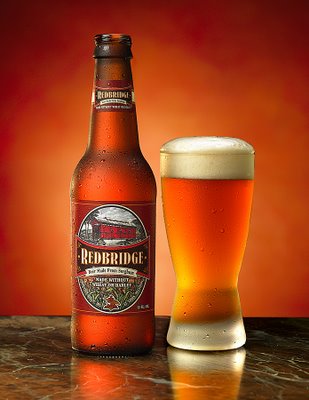 And that's when Hasselbeck and O'Donnell pulled out bottles of Redbridge and drank it as the crowd cheered along. O'Donnell: "Let me just say: I consider myself a little bit of a beer expert...and this gluten-free beer is fantastic!" And that, more or less, brought the segment to a spirited conclusion.
It was good to hear Hasselbeck tell her story while making important points about celiac disease on a show with The View's large audience. I hope the attention will result in more of the undiagnosed and misdiagnosed getting correct diagnoses--and feeling "awesome" as a result. They should know, however, that self-diagnosis through dieting or genetic testing is not definitive. If you have a negative genetic test for celiac disease, you are unlikely to have it, but if you have a positive genetic test you might or might not have it. The classic diagnostic routine for celiac disease is to undergo a set of simple blood tests while still on a diet including gluten. Based on the results of the blood tests (which measure one's reaction to dietary gluten), a physician will decide whether to go ahead with an upper endoscopy. (For more about testing, click here.)
It was good that Walters brought up family testing because it can be helpful in identifying the many cases that have gone undiagnosed or misdiagnosed. First-degree relatives of people with celiac disease should be tested and monitored for the condition even if they don't show symptoms or test positive, as the condition can develop at a later date or seem to go away for a time.
In fact, something that might've been helpful for The View's audience to hear is that, years ago, many doctors would mistakenly claim that children diagnosed as celiac had been cured when they were actually experiencing a remission of noticeable symptoms. So people told that they'd permanently recovered from celiac disease (and could go back to eating wheat, barley, etc.) should see informed doctors in order to be checked again for the condition.
Finally, a note about gluten-free beer: As readers of this blog are well aware, Hasselbeck could have had her first gluten-free beer much sooner than this week. Ramapo Valley Brewery's Passover Honey Lager, Bard's Tale Beer's Dragon's Gold, and Lakefront Brewery's New Grist all preceded Anheuser-Busch's Redbridge. Bottles of imported Toleration can also be had in New York City. And other gluten-free beers are available beyond the borders of the United States.
IRONY ALERT Later on the show, cake decorator Duff Goldman of Food Network's The Ace of Cakes presented a cake in the form of a full Winter '07 View mug--but there was no word as to whether it was safe for Hasselbeck. Maybe The View can invite the guys from Mr. Ritt's to the show for Hasselbeck's birthday (May 28).
Top photo: David Marc Fischer
Update: Click here for GFNYC Hasselbeck coverage
Yesterday there was some question as to when The View would cover celiac disease in more depth. The question was answered on today's pre-taped episode, when Elisabeth Hasselbeck spent about three minutes discussing her condition with her co-hosts during the "Hot Topics" portion of the show. [Update: You can view the segment here, though you might need to download a plugin to access it.]
The much-anticipated segment began when Barbara Walters switched the Hot Topic from Angelina Jolie to Hasselbeck's health. Walters, who seemed to have trouble remembering the name of her co-host's condition ("What do you call it?"), mentioned that people had been writing in about it.
Then Rosie O'Donnell chimed in, saying "Explain to people what this is, because a lot of people have said to me, 'Elisabeth never eats the food. What does she have--an eating disorder?' I said, 'I've seen her eat. She just has this thing.' Tell the thing."
So Hasselbeck told the thing--"It's called 'celiac disease'"--and went on to give an informal description of it as an autoimmune disorder in which the body has an intolerance of gluten found in wheat, barley, rye, and some oats. She noted that the damage caused by the reaction to the food puts one at high risk of diabetes, infertility, stomach cancers, and thyroid disease.
As the conversation opened up, Walters pointed out that people very often have celiac disease without realizing it. Hasselbeck agreed, saying that 3 million people in the United States alone have it but only 3 percent of them know it. She also noted that sometimes it's misdiagnosed (say, as Irritable Bowel Syndrome or colitis), resulting in patients getting ineffective treatments.
 Hasselbeck, who first came to national attention as a fourth-place finisher on Survivor: The Australian Outback, spoke about how she herself had been miserable for about four years ("nothing was helping me") but then took note of how much better she felt on Survivor's extremely restricted diet. "I went to Australia on Survivor and everyone else there was complaining they felt awful. I felt great. It was the first time....
 "All we were eating were fish that we caught...and rice...and I thought, 'Why am I feeling great here? I'm either allergic to the United States or it's something that I'm eating.'"
Then Walters brought up the hereditary aspect of celiac disease. Hasselbeck said that she was going to check her own child for the condition at about two years.
Hasselbeck added that one could could have malnutrition and bone loss as a side effect of undiagnosed celiac disease, "but if you know about it, it's awesome. There are tons of products out there, and for the first time I can drink beer! Today!! Because I have not had a beer...."
And that's when Hasselbeck and O'Donnell pulled out bottles of Redbridge and drank it as the crowd cheered along. O'Donnell: "Let me just say: I consider myself a little bit of a beer expert...and this gluten-free beer is fantastic!" And that, more or less, brought the segment to a spirited conclusion.It was good to hear Hasselbeck tell her story while making important points about celiac disease on a show with The View's large audience. I hope the attention will result in more of the undiagnosed and misdiagnosed getting correct diagnoses--and feeling "awesome" as a result. They should know, however, that self-diagnosis through dieting or genetic testing is not definitive. If you have a negative genetic test for celiac disease, you are unlikely to have it, but if you have a positive genetic test you might or might not have it. The classic diagnostic routine for celiac disease is to undergo a set of simple blood tests while still on a diet including gluten. Based on the results of the blood tests (which measure one's reaction to dietary gluten), a physician will decide whether to go ahead with an upper endoscopy. (For more about testing, click here.)
It was good that Walters brought up family testing because it can be helpful in identifying the many cases that have gone undiagnosed or misdiagnosed. First-degree relatives of people with celiac disease should be tested and monitored for the condition even if they don't show symptoms or test positive, as the condition can develop at a later date or seem to go away for a time.
In fact, something that might've been helpful for The View's audience to hear is that, years ago, many doctors would mistakenly claim that children diagnosed as celiac had been cured when they were actually experiencing a remission of noticeable symptoms. So people told that they'd permanently recovered from celiac disease (and could go back to eating wheat, barley, etc.) should see informed doctors in order to be checked again for the condition.
Finally, a note about gluten-free beer: As readers of this blog are well aware, Hasselbeck could have had her first gluten-free beer much sooner than this week. Ramapo Valley Brewery's Passover Honey Lager, Bard's Tale Beer's Dragon's Gold, and Lakefront Brewery's New Grist all preceded Anheuser-Busch's Redbridge. Bottles of imported Toleration can also be had in New York City. And other gluten-free beers are available beyond the borders of the United States.
IRONY ALERT Later on the show, cake decorator Duff Goldman of Food Network's The Ace of Cakes presented a cake in the form of a full Winter '07 View mug--but there was no word as to whether it was safe for Hasselbeck. Maybe The View can invite the guys from Mr. Ritt's to the show for Hasselbeck's birthday (May 28).
Top photo: David Marc Fischer
Subscribe to:
Posts (Atom)

 Posts
Posts

