CNN REPORT
Here's a YouTube video of Heidi Collins's substantial October 15, 2007 CNN Newsroom overview of celiac disease featuring Georgetown University gastroenterologist Dr. Aline Charabaty, who talks about the range of symptoms (which can include diarrhea, bloating, fatigue, anemia, depression, malnutrition, infertility, osteoporosis, joint pains, abdominal pain, neurological disorders, non-Hodgkin lymphoma, gastrointestinal malignancies, and weight and growth problems), the fact that celiac disease can manifest at any age, difficulties in raising research money, and the presence of gluten in many items including some pharmaceuticals.
I hope that week's other celiac disease coverage shows up on YouTube too.
Source (6:55)
Showing posts with label infertility. Show all posts
Showing posts with label infertility. Show all posts
Tuesday, June 05, 2007
CANADIAN CELIAC HEALTH SURVEY
I strongly recommend reading this recently published report--on a survey of Canadians with celiac disease (via PDF)--that appeared in the April 2007 issue of Digestive Diseases and Sciences. Surveyed were members of the Canadian Celiac Association who responded to a questionnaire reviewed by Dr. Peter Green, among others.
The report offers a detailed overview of people with celiac disease in north North America and concludes with remarks that seem applicable to people with celiac disease everywhere:
Thanks to dietitian Shelley Case for spreading the word about the article and this thorough survey, on which she played a leading role.
I strongly recommend reading this recently published report--on a survey of Canadians with celiac disease (via PDF)--that appeared in the April 2007 issue of Digestive Diseases and Sciences. Surveyed were members of the Canadian Celiac Association who responded to a questionnaire reviewed by Dr. Peter Green, among others.
The report offers a detailed overview of people with celiac disease in north North America and concludes with remarks that seem applicable to people with celiac disease everywhere:
The results of this study emphasize the need for early diagnosis, treatment and follow-up of celiac disease. Despite the availability of excellent antibody screening tests, delays in diagnosis of celiac disease remain a key issue. This needs to be addressed given the current prevalence estimates of 1 in 133 having celiac disease in North America. Better awareness among family physicians, dietitians and other health professionals about the variety of clinical presentations, especially anemia, osteoporosis, reproductive problems and autoimmune disorders is essential. Utilization of antibody testing for screening at-risk groups, especially first-degree relatives, would be potential strategies to reduce delays in diagnosis.Also highly recommended: Rosie Schwartz's "Gluten Be Gone!"--a related article from Canada's National Post (June 5, 2007).
Having to follow a strict gluten-free diet for life has a major impact on the quality of life of individuals with celiac disease. Given the difficulty in determining the gluten-free nature of foods, there is a need for food manufacturers to ensure complete and accurate labeling of gluten sources and for food service establishments to provide accurate information on the gluten content of food served. Comprehensive education of newly diagnosed patients, by dietitians and physicians with expertise with expertise in celiac disease, will help optimize compliance, improve quality of life and reduce the risk the numerous complications associated with this common disease. [sic]
Thanks to dietitian Shelley Case for spreading the word about the article and this thorough survey, on which she played a leading role.
Wednesday, May 02, 2007
ELISABETH HASSELBECK: PREGNANT AGAIN!
On Monday's The View, Elisabeth Hasselbeck announced that she has another bun in the gluten-free oven!
Here's the magic moment. (No, not that magic moment!) You just have to wait for some of the preliminary material to pass. And the "educational" portion of this post comes below the video.
Source (4:13)
This is as good a place as any to take note of connections between undiagnosed celiac disease and infertility/childbirth issues. Studies seem to have yielded varied conclusions, but as recently as August, 2005, Gastroenterology reported on a study that found that "undiagnosed celiac disease is associated with an increased risk of intrauterine growth retardation...low birth weight...very low birth weight...preterm birth...and caesarean section.... In contrast, those diagnosed with celiac disease before their births were not at increased risk for these adverse fetal outcomes."
And here's an older (2002) overview of fertility and pregnancy issues by Michelle Melin-Rogovin. Whether or not the interpretation of the data has since been thrown into doubt, it still makes sense to be on the lookout for celiac disease in cases of infertility (male and female) and other pregnancy and childbirth concerns.
On Monday's The View, Elisabeth Hasselbeck announced that she has another bun in the gluten-free oven!
Here's the magic moment. (No, not that magic moment!) You just have to wait for some of the preliminary material to pass. And the "educational" portion of this post comes below the video.
Source (4:13)
This is as good a place as any to take note of connections between undiagnosed celiac disease and infertility/childbirth issues. Studies seem to have yielded varied conclusions, but as recently as August, 2005, Gastroenterology reported on a study that found that "undiagnosed celiac disease is associated with an increased risk of intrauterine growth retardation...low birth weight...very low birth weight...preterm birth...and caesarean section.... In contrast, those diagnosed with celiac disease before their births were not at increased risk for these adverse fetal outcomes."
And here's an older (2002) overview of fertility and pregnancy issues by Michelle Melin-Rogovin. Whether or not the interpretation of the data has since been thrown into doubt, it still makes sense to be on the lookout for celiac disease in cases of infertility (male and female) and other pregnancy and childbirth concerns.
Wednesday, March 14, 2007
THE VIEW SPREADS THE WORD!
Today's much-anticipated View segment on celiac disease could mean a major improvement in the lives of many Americans. Thanks to the speedy work of the The View and the National Foundation for Celiac Awareness (NFCA), most of the coverage is already online via YouTube! (There's a little bit missing--I'll cover it in this post.)
Source (7:11)
This type of coverage is important and valuable because correctly diagnosing and treating celiac disease is a major public health issue in the United States. "As many as 3 million people in the United States have celiac disease but only about a tenth have been diagnosed, wrote Susan J. Landers in this American Medical News, referring to the findings of an independent panel of experts convened by the National Institutes of Health.
So how could more than 2.5 million Americans be unaware that they have celiac disease? Some of them were diagnosed with celiac disease years ago but incorrectly deemed "cured." (They might have been called "banana babies" because of the medical diet they were on.) Others may have been misdiagnosed or incompletely diagnosed by doctors who failed to test them for celiac disease, mistakenly thinking it too rare to consider. Testing for celiac disease with an informed physician is a relatively simple process, but because doctors underestimate the condition, it typically takes many years for patients to get correct celiac diagnoses after they first showed worrisome symptoms.
 That was the case for View co-host Elisabeth Hasselbeck (left) before she got her diagnosis and then "came out" on The View last January, when the show's co-hosts spent about three minutes chatting about the condition. Today The View devoted more than seven minutes to the subject in its final segments, calling upon Elisabeth's doctor (and mine) Peter Green and NFCA founder and Executive Director Alice Bast to add their perspectives. Also participating (in the absence of Barbara Walters): special guest co-host Susie Essman, who says that her mother has celiac disease and who may or may not have celiac disease herself. (On The View, Essman said that she doesn't know whether she has it, but in March 2003 Alex Witchel of The New York Times once quoted her as saying "I was diagnosed last year with celiac disease. Yeah, you can say it, I can be the poster child for it.")
The intro to the show promised "Elisabeth's revealing her battle with celiac disease...finding out why it's easily misdiagnosed...and how it can lead to everything from infertility to cancer."
As you can see in the video, Dr. Green offered a mini-presentation during which he noted that the manifestations of untreated celiac disease can be very varied. The ones mentioned on this particular episode included:
Dr. Green also showed how the gluten from wheat, barley, and rye causes atrophy of intestinal villi in people with celiac disease and explained that going on a lifelong gluten-free diet leads to healing for those people: "You have to be gluten-free your entire life. It's a lifelong diagnosis. If you get diagnosed in childhood or [as] an adult, it's for the rest of your life. Because as soon as you go back to gluten, you go back in that direction, flattening your villi." Or, as Bast put it: "A change in diet can change your life."
The genetic component of celiac disease also came up. Because close relatives of people with celiac disease are more likely to have the condition, it is a good idea for first- and second-degree relatives to be tested for it too. The standard diagnosis involves having blood samples taken while one is still eating gluten, then possibly following up with an upper endoscopy. Genetic testing can be useful in certain diagnostic situations, but there is currently no genetic test that, alone, will tell you that definitely have celiac disease.
There was a talk about foods such as cornbread and soy sauce containing the forbidden gluten--but just about anything (including cornbread and soy sauce, which is why clear labeling is so valuable) can be all right for the gluten-free diet depending on how the food is made. For example, the subject of a KitKat equivalent came up. I think Elisabeth cited Glutino Chocolate Wafers (and--I think mistakenly--said they were sugar-free). The closest KitKat equivalent that I've found is Glutano's Break Bar. (She said Glutino, I say Glutano.)
The show ended with some closing remarks not in the above clip. Rosie said, "Elisabeth, I think that was great that you talked about that 'cause, you know, it's been, you've had it for a while, right?"
Elisabeth said, "I have. And it took me so long to find out that I did. If I can just help someone not have six years of just hell before they find out....Especially kids, you know, they need more labeling on foods...and I'm going to try to do anything I can to get that fixed...."
Then there was this exchange between Behar and Essman (who had mentioned being on thyroid medication):
You know what I think would be interesting? Offering screening to anyone involved with The View and finding out what the results are.
In the meantime, here's the latest in the feud between Rosie and Donald Trump--this was also on today's episode.
Today's much-anticipated View segment on celiac disease could mean a major improvement in the lives of many Americans. Thanks to the speedy work of the The View and the National Foundation for Celiac Awareness (NFCA), most of the coverage is already online via YouTube! (There's a little bit missing--I'll cover it in this post.)
Source (7:11)
This type of coverage is important and valuable because correctly diagnosing and treating celiac disease is a major public health issue in the United States. "As many as 3 million people in the United States have celiac disease but only about a tenth have been diagnosed, wrote Susan J. Landers in this American Medical News, referring to the findings of an independent panel of experts convened by the National Institutes of Health.
So how could more than 2.5 million Americans be unaware that they have celiac disease? Some of them were diagnosed with celiac disease years ago but incorrectly deemed "cured." (They might have been called "banana babies" because of the medical diet they were on.) Others may have been misdiagnosed or incompletely diagnosed by doctors who failed to test them for celiac disease, mistakenly thinking it too rare to consider. Testing for celiac disease with an informed physician is a relatively simple process, but because doctors underestimate the condition, it typically takes many years for patients to get correct celiac diagnoses after they first showed worrisome symptoms.
 That was the case for View co-host Elisabeth Hasselbeck (left) before she got her diagnosis and then "came out" on The View last January, when the show's co-hosts spent about three minutes chatting about the condition. Today The View devoted more than seven minutes to the subject in its final segments, calling upon Elisabeth's doctor (and mine) Peter Green and NFCA founder and Executive Director Alice Bast to add their perspectives. Also participating (in the absence of Barbara Walters): special guest co-host Susie Essman, who says that her mother has celiac disease and who may or may not have celiac disease herself. (On The View, Essman said that she doesn't know whether she has it, but in March 2003 Alex Witchel of The New York Times once quoted her as saying "I was diagnosed last year with celiac disease. Yeah, you can say it, I can be the poster child for it.")
The intro to the show promised "Elisabeth's revealing her battle with celiac disease...finding out why it's easily misdiagnosed...and how it can lead to everything from infertility to cancer."
As you can see in the video, Dr. Green offered a mini-presentation during which he noted that the manifestations of untreated celiac disease can be very varied. The ones mentioned on this particular episode included:
bloating, gas, or adominal pain (may be misdiagnosed as IBD)I emphasize that the above are just some of the manifestations, because there are others--such as anemia and osteoporosis (notably among men), thyroid disease, and type 1 diabetes--that are quite common among people with celiac disease. Bast encouraged people wondering about themselves to take the Do I Have Celiac? diagnostic quiz at the NFCA website.
abnormal stool
irritability or behavior changes
fatigue [a very common symptom--Ed.]
itchy skin rash
infertility
miscarriage
depression
intestinal cancer
Dr. Green also showed how the gluten from wheat, barley, and rye causes atrophy of intestinal villi in people with celiac disease and explained that going on a lifelong gluten-free diet leads to healing for those people: "You have to be gluten-free your entire life. It's a lifelong diagnosis. If you get diagnosed in childhood or [as] an adult, it's for the rest of your life. Because as soon as you go back to gluten, you go back in that direction, flattening your villi." Or, as Bast put it: "A change in diet can change your life."
The genetic component of celiac disease also came up. Because close relatives of people with celiac disease are more likely to have the condition, it is a good idea for first- and second-degree relatives to be tested for it too. The standard diagnosis involves having blood samples taken while one is still eating gluten, then possibly following up with an upper endoscopy. Genetic testing can be useful in certain diagnostic situations, but there is currently no genetic test that, alone, will tell you that definitely have celiac disease.
There was a talk about foods such as cornbread and soy sauce containing the forbidden gluten--but just about anything (including cornbread and soy sauce, which is why clear labeling is so valuable) can be all right for the gluten-free diet depending on how the food is made. For example, the subject of a KitKat equivalent came up. I think Elisabeth cited Glutino Chocolate Wafers (and--I think mistakenly--said they were sugar-free). The closest KitKat equivalent that I've found is Glutano's Break Bar. (She said Glutino, I say Glutano.)
The show ended with some closing remarks not in the above clip. Rosie said, "Elisabeth, I think that was great that you talked about that 'cause, you know, it's been, you've had it for a while, right?"
Elisabeth said, "I have. And it took me so long to find out that I did. If I can just help someone not have six years of just hell before they find out....Especially kids, you know, they need more labeling on foods...and I'm going to try to do anything I can to get that fixed...."
Then there was this exchange between Behar and Essman (who had mentioned being on thyroid medication):
BEHAR (conversationally) You don't have it....That kind of exchange should sound pretty familiar to people in celiac world. My advice: If you think you might have it, consult with an informed doctor about getting tested. It typically all begins with a blood test while you're not on the gluten-free diet.
ESSMAN I probably do. I am doctor-phobic so I don't go get diagnosed....You know what? I eat the stuff and I feel bad and then I don't eat wheat and I feel good. So hello?
BEHAR It sounds like it's a little more complicated. It can cause worse diseases. You need to be diagnosed.
ESSMAN And my mother has it. And it's also connected to thyroid....
BEHAR Duh!
ESSMAN You know, I treat myself as if I do, and I don't eat the wheat.
You know what I think would be interesting? Offering screening to anyone involved with The View and finding out what the results are.
In the meantime, here's the latest in the feud between Rosie and Donald Trump--this was also on today's episode.
Thursday, March 01, 2007
MEDSCAPE UPDATE
Two new articles on Medscape deal with celiac disease.
"Coeliac Disease: Relationship to Endocrine Autoimmunity" is a case study of a man who was treated successfully for Addison's disease and type 1 diabetes, but received a diagnosis of celiac disease after showing symptoms of fatigue and iron deficiency anemia about 15 years into his treatment for the other conditions.
An accompanying discussion identifies common celiac symptoms as malabsorption (60%), lethargy (50%), and anemia (12-22%) but notes that physical examination is often normal. It lists associated disorders as fatty liver disease, dermatitis herpetiformis, epilepsy, neuropathy, male and female infertility, Addison's disease, and type 1 diabetes. It also observes that cigarette smoking reduced the risk of celiac disease by 80%--though I'd recommend consulting with a physician before taking up smoking as a preventative therapy. The article appears in The British Journal of Diabetes and Vascular Disease (Volume 6, Number 6, 2006).
"Advances in Celiac Disease" is a multi-part summary of "recent critical research in celiac disease." I could actually use a summary of the summary, but here are three of the points that stood out for me:
The former study put the frequency of celiac disease at 1 in 200; the latter as possibly as high as 1 in 100.
Two new articles on Medscape deal with celiac disease.
"Coeliac Disease: Relationship to Endocrine Autoimmunity" is a case study of a man who was treated successfully for Addison's disease and type 1 diabetes, but received a diagnosis of celiac disease after showing symptoms of fatigue and iron deficiency anemia about 15 years into his treatment for the other conditions.
An accompanying discussion identifies common celiac symptoms as malabsorption (60%), lethargy (50%), and anemia (12-22%) but notes that physical examination is often normal. It lists associated disorders as fatty liver disease, dermatitis herpetiformis, epilepsy, neuropathy, male and female infertility, Addison's disease, and type 1 diabetes. It also observes that cigarette smoking reduced the risk of celiac disease by 80%--though I'd recommend consulting with a physician before taking up smoking as a preventative therapy. The article appears in The British Journal of Diabetes and Vascular Disease (Volume 6, Number 6, 2006).
"Advances in Celiac Disease" is a multi-part summary of "recent critical research in celiac disease." I could actually use a summary of the summary, but here are three of the points that stood out for me:
This report appears in Current Opinion in Gastroenterology (Volume 23, Number 2, 2007).Celiac disease screening among women of reproductive age could yield significant health benefits. Primary care doctors are increasingly involved in identifying celiac disease patients. A Finnish and Hungarian group is developing a point-of-care testing kit that would yield results within 30 minutes.
The former study put the frequency of celiac disease at 1 in 200; the latter as possibly as high as 1 in 100.
Monday, February 12, 2007
VIDEO: VIEWING THE VIEW

For the record: Video of the January 26, 2007 segment of The View (in which Elisabeth Hasselbeck and her co-hosts discuss celiac disease) can be found at the website of the National Foundation for Celiac Awareness. (It might be necessary to download a plugin to access the video.)
An online discussion of the segment can be found here.
Photo: David Marc Fischer
For the record: Video of the January 26, 2007 segment of The View (in which Elisabeth Hasselbeck and her co-hosts discuss celiac disease) can be found at the website of the National Foundation for Celiac Awareness. (It might be necessary to download a plugin to access the video.)
An online discussion of the segment can be found here.
Photo: David Marc Fischer
Friday, January 26, 2007
TV COVERAGE: THE VIEW
Update: Click here for GFNYC Hasselbeck coverage
Yesterday there was some question as to when The View would cover celiac disease in more depth. The question was answered on today's pre-taped episode, when Elisabeth Hasselbeck spent about three minutes discussing her condition with her co-hosts during the "Hot Topics" portion of the show. [Update: You can view the segment here, though you might need to download a plugin to access it.]
The much-anticipated segment began when Barbara Walters switched the Hot Topic from Angelina Jolie to Hasselbeck's health. Walters, who seemed to have trouble remembering the name of her co-host's condition ("What do you call it?"), mentioned that people had been writing in about it.
Then Rosie O'Donnell chimed in, saying "Explain to people what this is, because a lot of people have said to me, 'Elisabeth never eats the food. What does she have--an eating disorder?' I said, 'I've seen her eat. She just has this thing.' Tell the thing."
So Hasselbeck told the thing--"It's called 'celiac disease'"--and went on to give an informal description of it as an autoimmune disorder in which the body has an intolerance of gluten found in wheat, barley, rye, and some oats. She noted that the damage caused by the reaction to the food puts one at high risk of diabetes, infertility, stomach cancers, and thyroid disease.
As the conversation opened up, Walters pointed out that people very often have celiac disease without realizing it. Hasselbeck agreed, saying that 3 million people in the United States alone have it but only 3 percent of them know it. She also noted that sometimes it's misdiagnosed (say, as Irritable Bowel Syndrome or colitis), resulting in patients getting ineffective treatments.
Hasselbeck, who first came to national attention as a fourth-place finisher on Survivor: The Australian Outback, spoke about how she herself had been miserable for about four years ("nothing was helping me") but then took note of how much better she felt on Survivor's extremely restricted diet. "I went to Australia on Survivor and everyone else there was complaining they felt awful. I felt great. It was the first time....
"All we were eating were fish that we caught...and rice...and I thought, 'Why am I feeling great here? I'm either allergic to the United States or it's something that I'm eating.'"
Then Walters brought up the hereditary aspect of celiac disease. Hasselbeck said that she was going to check her own child for the condition at about two years.
Hasselbeck added that one could could have malnutrition and bone loss as a side effect of undiagnosed celiac disease, "but if you know about it, it's awesome. There are tons of products out there, and for the first time I can drink beer! Today!! Because I have not had a beer...."
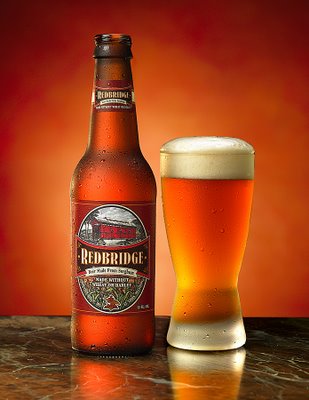 And that's when Hasselbeck and O'Donnell pulled out bottles of Redbridge and drank it as the crowd cheered along. O'Donnell: "Let me just say: I consider myself a little bit of a beer expert...and this gluten-free beer is fantastic!" And that, more or less, brought the segment to a spirited conclusion.
It was good to hear Hasselbeck tell her story while making important points about celiac disease on a show with The View's large audience. I hope the attention will result in more of the undiagnosed and misdiagnosed getting correct diagnoses--and feeling "awesome" as a result. They should know, however, that self-diagnosis through dieting or genetic testing is not definitive. If you have a negative genetic test for celiac disease, you are unlikely to have it, but if you have a positive genetic test you might or might not have it. The classic diagnostic routine for celiac disease is to undergo a set of simple blood tests while still on a diet including gluten. Based on the results of the blood tests (which measure one's reaction to dietary gluten), a physician will decide whether to go ahead with an upper endoscopy. (For more about testing, click here.)
It was good that Walters brought up family testing because it can be helpful in identifying the many cases that have gone undiagnosed or misdiagnosed. First-degree relatives of people with celiac disease should be tested and monitored for the condition even if they don't show symptoms or test positive, as the condition can develop at a later date or seem to go away for a time.
In fact, something that might've been helpful for The View's audience to hear is that, years ago, many doctors would mistakenly claim that children diagnosed as celiac had been cured when they were actually experiencing a remission of noticeable symptoms. So people told that they'd permanently recovered from celiac disease (and could go back to eating wheat, barley, etc.) should see informed doctors in order to be checked again for the condition.
Finally, a note about gluten-free beer: As readers of this blog are well aware, Hasselbeck could have had her first gluten-free beer much sooner than this week. Ramapo Valley Brewery's Passover Honey Lager, Bard's Tale Beer's Dragon's Gold, and Lakefront Brewery's New Grist all preceded Anheuser-Busch's Redbridge. Bottles of imported Toleration can also be had in New York City. And other gluten-free beers are available beyond the borders of the United States.
IRONY ALERT Later on the show, cake decorator Duff Goldman of Food Network's The Ace of Cakes presented a cake in the form of a full Winter '07 View mug--but there was no word as to whether it was safe for Hasselbeck. Maybe The View can invite the guys from Mr. Ritt's to the show for Hasselbeck's birthday (May 28).
Top photo: David Marc Fischer
Update: Click here for GFNYC Hasselbeck coverage
Yesterday there was some question as to when The View would cover celiac disease in more depth. The question was answered on today's pre-taped episode, when Elisabeth Hasselbeck spent about three minutes discussing her condition with her co-hosts during the "Hot Topics" portion of the show. [Update: You can view the segment here, though you might need to download a plugin to access it.]
The much-anticipated segment began when Barbara Walters switched the Hot Topic from Angelina Jolie to Hasselbeck's health. Walters, who seemed to have trouble remembering the name of her co-host's condition ("What do you call it?"), mentioned that people had been writing in about it.
Then Rosie O'Donnell chimed in, saying "Explain to people what this is, because a lot of people have said to me, 'Elisabeth never eats the food. What does she have--an eating disorder?' I said, 'I've seen her eat. She just has this thing.' Tell the thing."
So Hasselbeck told the thing--"It's called 'celiac disease'"--and went on to give an informal description of it as an autoimmune disorder in which the body has an intolerance of gluten found in wheat, barley, rye, and some oats. She noted that the damage caused by the reaction to the food puts one at high risk of diabetes, infertility, stomach cancers, and thyroid disease.
As the conversation opened up, Walters pointed out that people very often have celiac disease without realizing it. Hasselbeck agreed, saying that 3 million people in the United States alone have it but only 3 percent of them know it. She also noted that sometimes it's misdiagnosed (say, as Irritable Bowel Syndrome or colitis), resulting in patients getting ineffective treatments.
Hasselbeck, who first came to national attention as a fourth-place finisher on Survivor: The Australian Outback, spoke about how she herself had been miserable for about four years ("nothing was helping me") but then took note of how much better she felt on Survivor's extremely restricted diet. "I went to Australia on Survivor and everyone else there was complaining they felt awful. I felt great. It was the first time.... "All we were eating were fish that we caught...and rice...and I thought, 'Why am I feeling great here? I'm either allergic to the United States or it's something that I'm eating.'"
Then Walters brought up the hereditary aspect of celiac disease. Hasselbeck said that she was going to check her own child for the condition at about two years.
Hasselbeck added that one could could have malnutrition and bone loss as a side effect of undiagnosed celiac disease, "but if you know about it, it's awesome. There are tons of products out there, and for the first time I can drink beer! Today!! Because I have not had a beer...."
And that's when Hasselbeck and O'Donnell pulled out bottles of Redbridge and drank it as the crowd cheered along. O'Donnell: "Let me just say: I consider myself a little bit of a beer expert...and this gluten-free beer is fantastic!" And that, more or less, brought the segment to a spirited conclusion.It was good to hear Hasselbeck tell her story while making important points about celiac disease on a show with The View's large audience. I hope the attention will result in more of the undiagnosed and misdiagnosed getting correct diagnoses--and feeling "awesome" as a result. They should know, however, that self-diagnosis through dieting or genetic testing is not definitive. If you have a negative genetic test for celiac disease, you are unlikely to have it, but if you have a positive genetic test you might or might not have it. The classic diagnostic routine for celiac disease is to undergo a set of simple blood tests while still on a diet including gluten. Based on the results of the blood tests (which measure one's reaction to dietary gluten), a physician will decide whether to go ahead with an upper endoscopy. (For more about testing, click here.)
It was good that Walters brought up family testing because it can be helpful in identifying the many cases that have gone undiagnosed or misdiagnosed. First-degree relatives of people with celiac disease should be tested and monitored for the condition even if they don't show symptoms or test positive, as the condition can develop at a later date or seem to go away for a time.
In fact, something that might've been helpful for The View's audience to hear is that, years ago, many doctors would mistakenly claim that children diagnosed as celiac had been cured when they were actually experiencing a remission of noticeable symptoms. So people told that they'd permanently recovered from celiac disease (and could go back to eating wheat, barley, etc.) should see informed doctors in order to be checked again for the condition.
Finally, a note about gluten-free beer: As readers of this blog are well aware, Hasselbeck could have had her first gluten-free beer much sooner than this week. Ramapo Valley Brewery's Passover Honey Lager, Bard's Tale Beer's Dragon's Gold, and Lakefront Brewery's New Grist all preceded Anheuser-Busch's Redbridge. Bottles of imported Toleration can also be had in New York City. And other gluten-free beers are available beyond the borders of the United States.
IRONY ALERT Later on the show, cake decorator Duff Goldman of Food Network's The Ace of Cakes presented a cake in the form of a full Winter '07 View mug--but there was no word as to whether it was safe for Hasselbeck. Maybe The View can invite the guys from Mr. Ritt's to the show for Hasselbeck's birthday (May 28).
Top photo: David Marc Fischer
Subscribe to:
Posts (Atom)

 Posts
Posts

